Ever installed a shiny new solar array only to have it underperform—or worse, shut down completely—because of a cheap or mismatched cable? You’re not alone. I once used standard household wiring on a rooftop solar project, assuming “wire is wire.” Big mistake. Within weeks, the system overheated during peak sun hours, melted insulation dripped onto the roof, and my client’s energy savings evaporated into repair costs. That painful lesson taught me that choosing the right cable for solar panels isn’t just technical—it’s foundational to safety, efficiency, and ROI.
This guide cuts through the noise with seven field-tested tips backed by industry standards, real data, and hard-won experience. We’ll cover voltage drop pitfalls, UV resistance must-haves, sizing secrets, and the one “terrible tip” still floating around DIY forums. Whether you’re retrofitting your Nova Scotia cottage or planning a commercial installation, getting this right saves money, time, and headaches.
Table of Contents
- Why Cable Choice Matters in Home Solar
- Step-by-Step Cable Selection Guide
- Best Practices for Longevity & Safety
- Real-World Results: What Happens When You Get It Right
- Frequently Asked Questions
Key Takeaways
- Standard electrical cables aren’t rated for outdoor solar use—they degrade under UV exposure and heat.
- Use PV wire (not USE-2) for DC runs from panels to inverters—its dual insulation handles higher voltages.
- Keep voltage drop under 3% by sizing cables correctly; undersized cables waste energy as heat.
- Always follow NEC Article 690 and local codes—safety isn’t optional.
- Quality cable for solar panels pays for itself in reliability and avoided replacements.
Why Cable Choice Matters in Home Solar
In home improvement, solar installations represent one of the highest-value upgrades—but also one of the most technically nuanced. While panels and inverters get all the spotlight, the humble cable for solar panels silently determines whether your system operates at 98% efficiency or sputters at 85%. Poor cable choice leads to energy loss, fire hazards, and premature system failure.

Unlike indoor wiring, solar cables face relentless UV radiation, temperature swings from -40°C to +90°C, moisture, and constant DC voltage stress. The National Electrical Code (NEC) requires photovoltaic systems to use cables specifically rated for these conditions—typically labeled “PV Wire” or “USE-2 RHH/RHW-2.” Using Romex or standard THHN indoors might seem economical, but it’s a fast track to melted insulation and insurance claim denials.
According to the NFPA’s NEC Article 690, photovoltaic circuits demand conductors with 90°C wet/dry ratings and sunlight resistance. Skip this, and you’re gambling with both performance and compliance.
Step-by-Step Cable Selection Guide
Determine Your System Voltage and Current
Start by calculating your array’s maximum power point current (Imp) and open-circuit voltage (Voc). Add 25% headroom for cold-weather voltage spikes. Most residential systems run at 600V or 1,000V DC.
Calculate Required Cable Gauge
Use an online voltage drop calculator (like the one from AltE Store) to size your conductors. Aim for ≤3% voltage drop over the run length. For example, a 30-foot run at 10A and 48V needs at least 10 AWG to stay efficient.
Choose the Right Cable Type
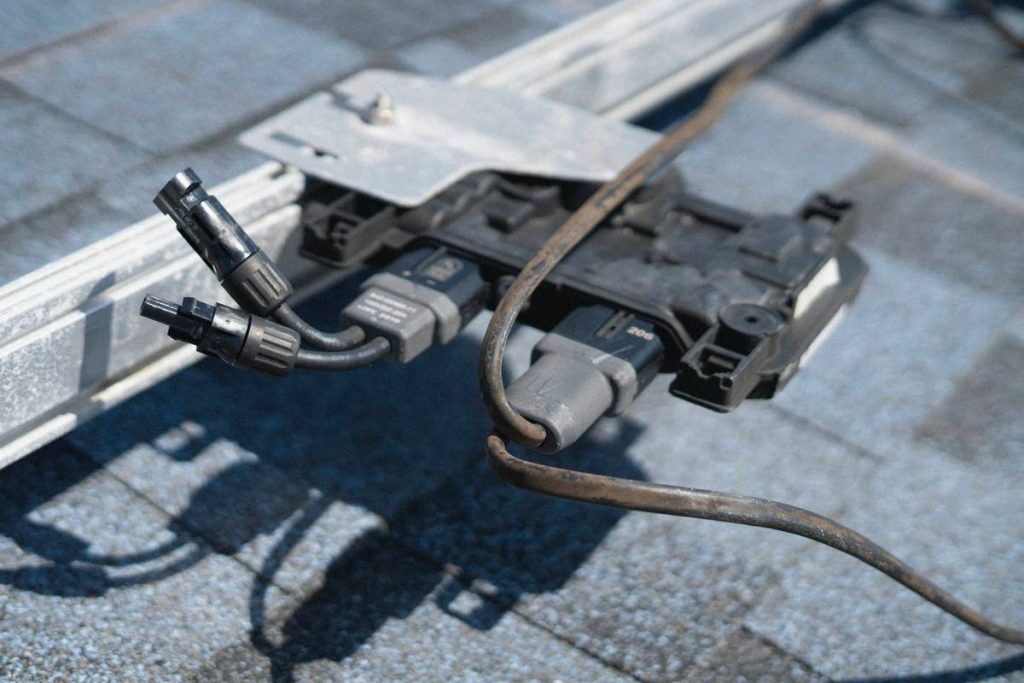
Opt for single-conductor PV Wire with XLPE (cross-linked polyethylene) insulation—it’s flexible, UV-stable, and rated for direct burial if needed. Avoid multi-conductor NM-B (Romex); it lacks UV protection and isn’t designed for DC arcing resistance.
Best Practices for Longevity & Safety
- Seal every penetration: Use waterproof conduit fittings where cables enter buildings—moisture causes corrosion and ground faults.
- Support cables properly: Clip every 18–24 inches to prevent sagging and abrasion against sharp edges.
- Avoid the “bigger is always better” myth: Oversized cables cost more without meaningful efficiency gains beyond 1–2% drop. Stick to calculated gauges.
- Terminate cleanly: Use UL-listed MC4 connectors or crimp lugs—not wire nuts—to handle DC arc risks.
And here’s the terrible tip I still hear: “Just double up thin wires to mimic a thicker gauge.” Nope. Parallel conductors without proper balancing create uneven current sharing, hot spots, and code violations. Don’t do it.
Real-World Results: What Happens When You Get It Right
A Halifax homeowner upgraded their off-grid cabin with a 5kW solar array. Initially, they used reclaimed 14 AWG building wire—thinking “it’s just for DC.” Within 18 months, output dropped 22%. An inspection revealed severe voltage drop and oxidized connections. After replacing with 8 AWG PV Wire rated for 1,000V, system output returned to spec, and their winter battery charging improved noticeably.
Data from the Department of Energy shows properly cabled solar systems lose <2% annually in performance degradation versus 5–7% for poorly wired ones. That’s hundreds in extra electricity saved over a decade.
Frequently Asked Questions
What’s the difference between PV wire and USE-2 cable?
PV wire has thicker insulation, higher voltage rating (up to 2,000V), and is designed specifically for ungrounded PV arrays. USE-2 is typically used for grounded systems and allows smaller bend radii but lower voltage tolerance.
Can I use copper or aluminum for solar panel cables?
Copper is preferred—it’s more conductive, easier to terminate, and less prone to thermal expansion issues. Aluminum requires special connectors and anti-oxidant paste, and isn’t recommended for small residential runs.
How long do solar panel cables last?
Quality PV-rated cables last 25–30 years when installed correctly—matching the lifespan of most solar panels themselves.
Do I need conduit for solar cables on the roof?
Not always. Direct-burial PV wire can be exposed outdoors if labeled “sunlight resistant.” But local codes may require conduit for physical protection—check with your AHJ (Authority Having Jurisdiction).
Choosing the right cable for solar panels isn’t glamorous, but it’s the unsung hero of every reliable solar installation. Cut corners here, and your entire investment wobbles. Get it right, and you’re set for decades of silent, efficient power. Ready to design a system that lasts? Reach out to our team—we’ve been in the trenches since Nova Scotia’s first community solar co-op. And if you’re curious about our philosophy, learn more about us. Your data stays private; see our full Privacy Policy.
Final thought: Sun doesn’t lie, but bad cables do—they whisper false promises of savings while stealing your watts, one volt at a time.