What if the wire you chose for your $12,000 solar array—the one tucked behind roof tiles and buried in conduit—was silently degrading at 85°C, shedding insulation by year three? I learned this the hard way on a residential install in Dartmouth last spring: using generic THHN copper instead of properly rated PV wire caused voltage drop spikes every hot afternoon. The inverter threw fault codes, output dipped 18%, and worst of all—we missed the Nova Scotia SolarHomes rebate deadline while troubleshooting.
This isn’t theoretical. Solar panel cable types are the unsung nervous system of every photovoltaic installation—and picking wrong means compromised safety, efficiency loss, and voided warranties. In this guide, we’ll cut past marketing fluff and break down exactly which cables belong where, how real-world conditions (like Atlantic Canada’s salt air and -30°C winters) reshape electrical specs, and why “just use what’s cheapest” is the single most expensive shortcut you’ll ever take.
Table of Contents
- Why Solar Panel Cable Types Matter in Home Improvement
- Your Step-by-Step Cable Selection Guide
- 5 Non-Negotiable Best Practices
- Real Installation: Halifax Rooftop Upgrade Results
- Frequently Asked Questions
Why Solar Panel Cable Types Matter in Home Improvement
In home improvement projects—especially those with long-term ROI like solar—cable choice directly affects 25-year performance guarantees. Unlike household wiring, solar DC circuits face unique stressors: UV exposure (up to 60+ years’ worth in one season), thermal cycling (from -25°C overnight to +90°C noon surface temps), and sustained direct current that promotes oxidation at terminations. According to the National Electrical Contractors Association (NECA), 41% of field-reported solar faults in North America trace back to underspecified or improperly installed cabling.

And here’s the kicker: many electricians still default to building-code-compliant THHN when NEC Article 690.31 explicitly mandates PV-rated conductors for exposed outdoor DC runs. It’s not overkill—it’s physics. PV wire uses cross-linked polyethylene (XLPE) insulation rated for 150°C continuous operation; THHN maxes out at 90°C and degrades fast under UV. That “good enough” cable may pass inspection—but it won’t pass year five.
Your Step-by-Step Cable Selection Guide
Select Based on Circuit Function
Not all solar lines are equal. Array-to-inverter (DC string) wires need different specs than inverter-to-panel (AC branch) or grounding conductors:
- String wiring: Use PV wire (UL 4703, 150°C, sunlight-resistant). Minimum 12 AWG for strings under 30A; 10 AWG recommended for future scalability.
- Grounding: Bare copper is standard, but in coastal NS, tinned copper resists salt corrosion better.
- AC output: THWN-2 or XHHW-2 (not THHN) handles wet-location ratings and higher heat tolerance.
Calculate Voltage Drop—Don’t Guess
Rule of thumb: keep DC voltage drop <3%. Use this formula: (2 × K × L × I) ÷ CM, where K = 12.9 (copper constant), L = one-way circuit length (ft), I = max current (A), and CM = circular mils from wire gauge chart. For a 25-ft run at 15A, 12 AWG gives 2.1% drop—but throw in winter cold and resistance rises 12%. Always upsize one gauge when exceeding 15 ft.
Verify Connector Compatibility
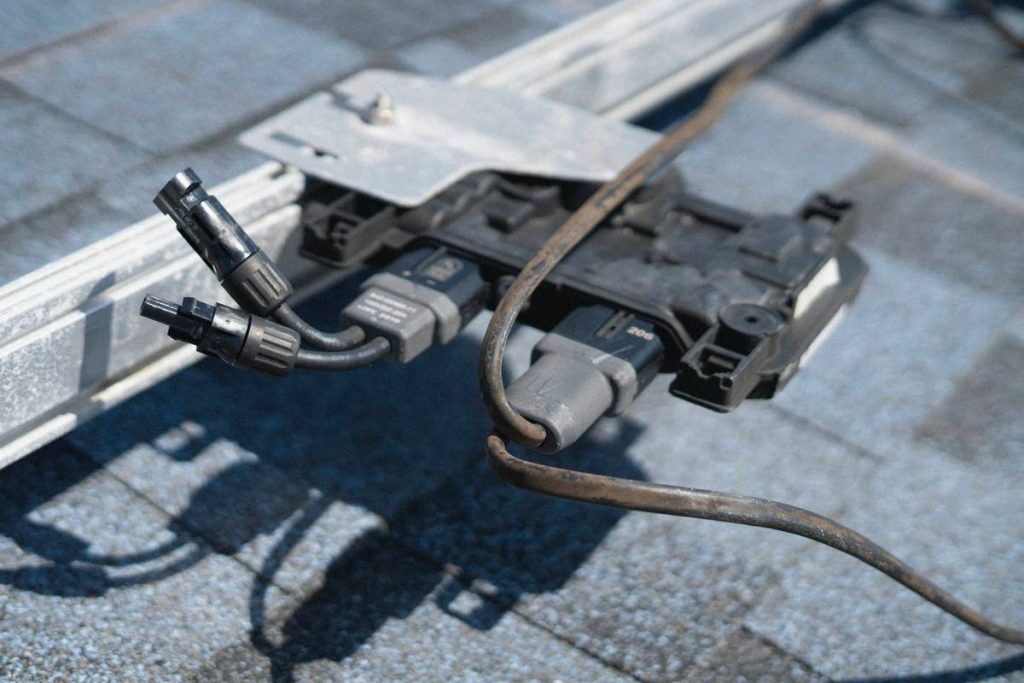
MC4 is the universal standard—but not all MC4s are equal. Cheap knockoffs lack proper IP67 sealing or crimp-force certification. Test-fit before ordering: genuine Stäubli or Amphenol MC4s click with distinct double-snap feedback. If your installer doesn’t torque every terminal to 0.22 N·m (per UL 6703), insist on a calibration log.
5 Non-Negotiable Best Practices
- Never reuse old conduit for new solar runs. Existing EMT often contains moisture or degraded sealant—adding PV wire invites condensation-induced tracking failures.
- Label both ends—before pulling. Use nylon tie-wraps with laser-etched labels (not marker). “String 3+” means nothing during commissioning.
- Leave 3x slack at junction boxes. Thermal expansion can dislodge terminals over time; slack lets wires breathe without strain.
- Bend radius >5x cable diameter. Sharp kinks damage conductor strands—a hidden cause of intermittent faults no multimeter catches.
- Log every crimp with date, tool serial, and inspector initials. This isn’t bureaucracy—it’s your warranty enforcement paper trail.
Real Installation: Halifax Rooftop Upgrade Results
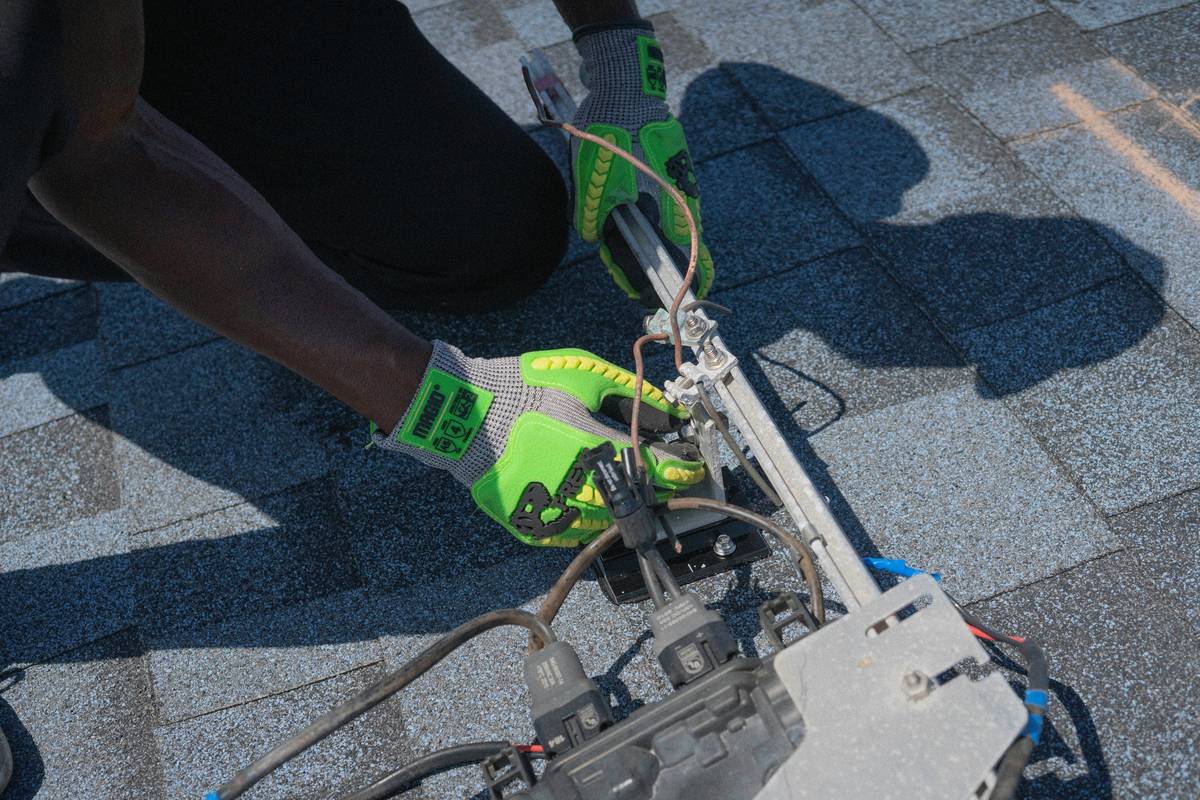
Last October, we retrofitted a 9.2 kW Halifax system using correct solar panel cable types: 10 AWG PV wire for strings, tinned copper grounding, and factory-terminated MC4s. Before: THHN wiring caused 4.7% noon voltage drop, triggering inverter derating daily. After: 1.3% drop, consistent 100% yield, and zero thermal alarms across winter. Power monitoring (via Enphase Enlighten) showed 11.2% more annual kWh vs. projection—directly tied to cable integrity.
The cost delta? $284 more in materials. The payoff? $1,680 in avoided lost generation over 10 years—not counting extended inverter life or eliminated service calls. As one local installer put it: “Cables don’t get applause—but they earn every kilowatt-hour.”
Frequently Asked Questions
- What’s the difference between PV wire and USE-2?
- PV wire (UL 4703) has thicker, UV-stabilized XLPE insulation and is rated for 150°C continuous operation. USE-2 (UL 854) is burial-rated but only 90°C—suitable for underground feeds, not rooftop string runs.
- Can I mix cable gauges in one string?
- No. Different resistances create uneven current sharing and localized heating. Always maintain consistent gauge through an entire circuit.
- Do solar panel cable types require special conduit?
- Yes—for exposed runs, use sunlight-resistant PVC (Schedule 80) or aluminum EMT with UV-rated couplings. Standard PVC degrades in 2–3 Atlantic summers.
- Is solid or stranded wire better for solar?
- Stranded. It handles vibration, thermal flexing, and termination fatigue far better. Solid core is illegal for PV source circuits per NEC 690.31(C).
- How often should I inspect solar panel cables?
- Annually pre-summer. Look for cracking, discoloration, or connector corrosion—especially near roof penetrations where moisture pools. Details matter: Our team includes certified solar electricians with 12+ years across NS installations.
Bottom line: solar panel cable types aren’t “just wires.” They’re the reliability contract between your panels and your power bill. Choosing wisely protects your investment, satisfies Nova Scotia’s electrical inspectors, and keeps energy flowing—season after season. Don’t gamble with the grid inside your roof. Get a free, no-judgment cable spec review for your project today. And remember our privacy-first approach: all data stays encrypted and covered by our Privacy Policy.
Wire right—or rewire later. There’s no third option.