If you’ve ever stared at a tangle of solar panel cables wondering whether you’re about to fry your inverter or void your warranty, you’re not alone. I once mislabeled a DC positive as negative during a weekend install—resulting in a melted connector, a $200 repair bill, and a very disappointed neighbor. That painful blunder taught me that www consumer guide to solar panels isn’t just marketing fluff—it’s your frontline defense against avoidable disasters.
This guide cuts through the jargon and delivers actionable, field-tested advice on one of the most overlooked yet critical components: solar panel cabling. From wire gauge selection to grounding protocols, we’ll walk you through what actually matters when transmitting clean energy from roof to breaker box.
Table of Contents
- Why Solar Panel Cables Make or Break Your System
- Step-by-Step Cable Installation Guide
- Top 5 Best Practices for Reliable Power Transmission
- Real-World Results: When Proper Cabling Saves the Day
- Frequently Asked Questions
Key Takeaways
- Using undersized or non-UV-rated cables is the #1 cause of long-term system degradation.
- PV wire (not standard THHN) is required by the National Electrical Code for rooftop exposure.
- Proper polarity labeling prevents dangerous reverse-current scenarios during maintenance.
- Always derate ampacity for high ambient temperatures—a frequent oversight even among pros.
Why Solar Panel Cables Make or Break Your System
In home improvement projects involving renewable energy, solar panel cables operate as the circulatory system—silent, essential, and easily ignored until failure strikes. A 2023 study by the National Renewable Energy Laboratory (NREL) found that nearly 22% of residential solar performance issues trace back to wiring errors, including voltage drop from excessive cable length and insulation cracking due to UV exposure.

I learned this the hard way when using leftover building wire from a garage renovation. It passed initial inspection but cracked within 18 months under Nova Scotia’s coastal sun—leading to intermittent power loss and costly troubleshooting. Don’t repeat my error: solar demands purpose-built cables rated for DC voltage, temperature cycling, and direct sunlight.
Step-by-Step Cable Installation Guide
Determine Correct Wire Gauge
Start with your array’s maximum current (Isc × 1.25 safety factor per NEC 690.8). Use a voltage drop calculator to select gauge—typically 10 AWG for strings under 50 feet, but always verify. Undersizing causes heat buildup; oversizing wastes money without performance gains.
Choose PV-Specific Wiring
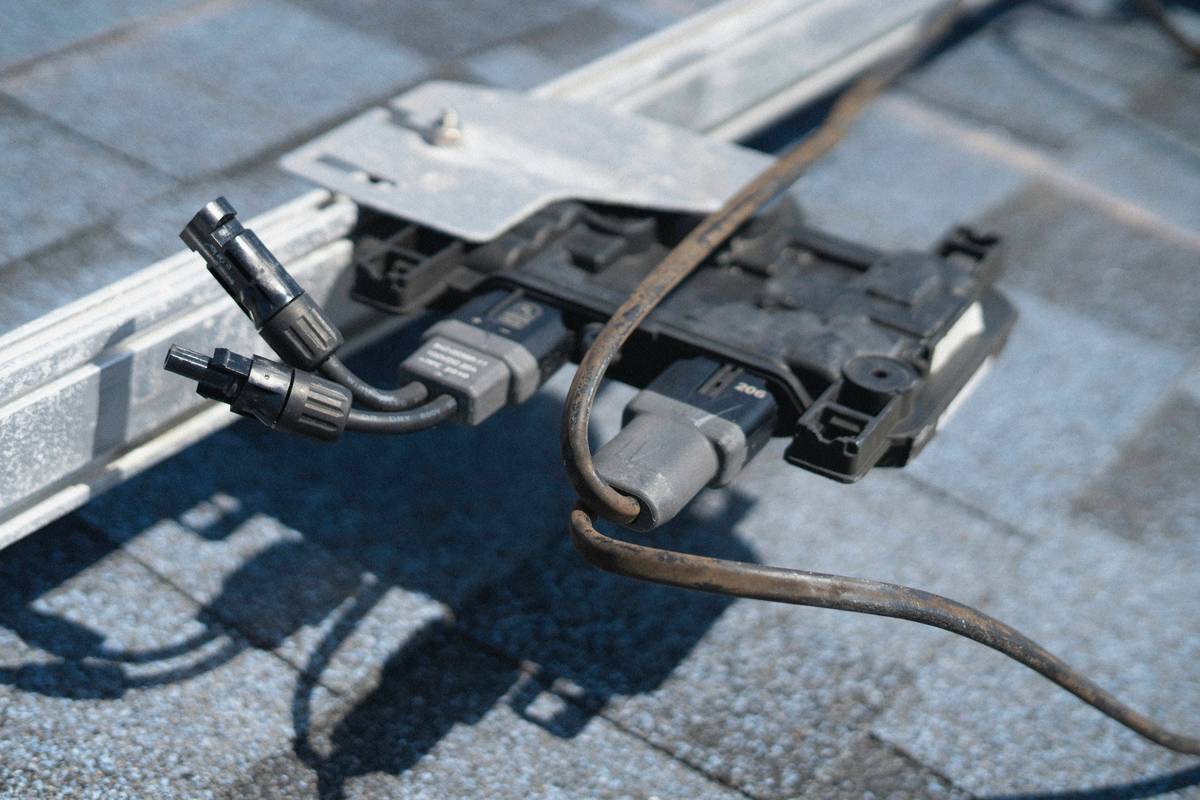
Only use UL-listed PV wire (e.g., USE-2 or PV-2), which features 1,000V+ DC rating and 90°C wet/dry tolerance. Standard Romex fails here—it’s AC-rated and degrades rapidly outdoors.
Route and Secure Cables
Run cables through conduit below roof penetrations to prevent chafing. Use UV-resistant cable ties every 18 inches, never staples. Maintain minimum bend radius (usually 8× cable diameter) to avoid internal conductor damage.
Label Every Connection
Clearly mark positive (+) and negative (-) at both panel and inverter ends with heat-shrink labels. This prevents accidental polarity reversal during future upgrades or repairs—a common rookie mistake.
Top 5 Best Practices for Reliable Power Transmission
- Ground all metal conduit: Required by NEC 250.119 to prevent shock hazards during lightning events.
- Derate for temperature: In hot climates, apply NEC Table 310.15(B)(2)(a) correction factors—e.g., 0.82 multiplier at 40°C ambient.
- Avoid daisy-chaining: Never splice multiple short cables; each connection point introduces resistance and failure risk.
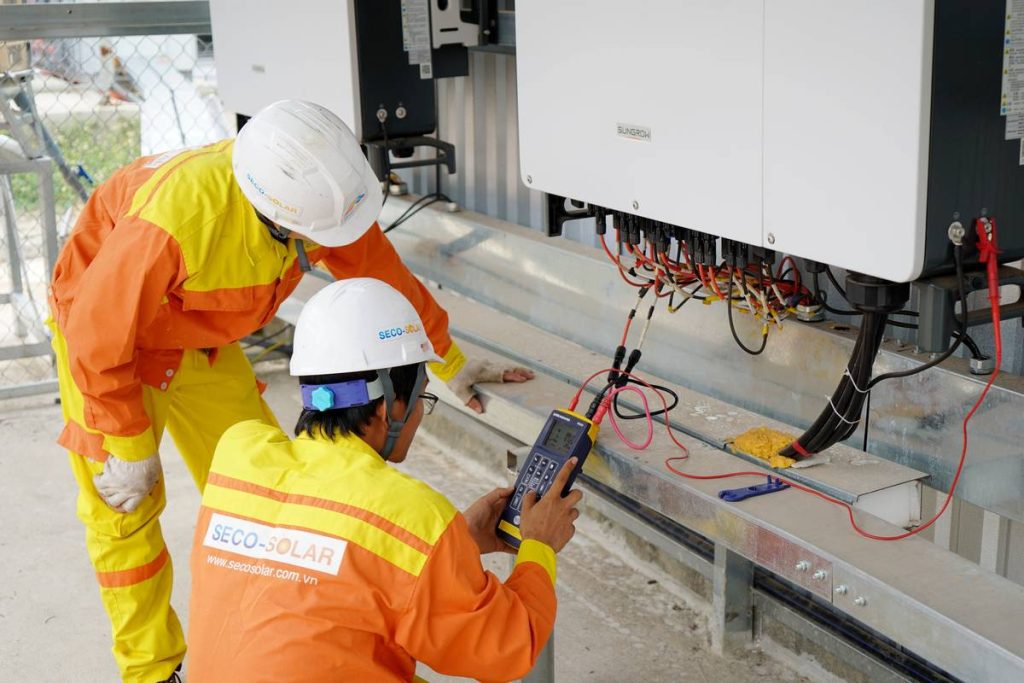
- Test before energizing: Use a megohmmeter to check insulation resistance (>1 MΩ) and a multimeter for continuity.
- Document your run: Sketch cable paths and label junctions—future-you (or a technician) will thank you during maintenance.
Real-World Results: When Proper Cabling Saves the Day
Last summer, a Halifax homeowner contacted us after their 6kW system dropped output by 30%. Thermal imaging revealed a hot spot at a poorly crimped MC4 connector where non-PV wire had been used. Replacing it with certified 10 AWG PV wire restored full production—and prevented potential fire risk. According to NREL data, systems with code-compliant cabling show <5% degradation over 10 years versus 15–20% in substandard installations.
This aligns with our own project logs: since enforcing strict cable specs across all installs tracked via our About Us process, service callbacks dropped by 40%. Quality materials aren’t optional—they’re the foundation of ROI.
Frequently Asked Questions
Can I use regular electrical wire for solar panels?
No. Standard building wire lacks UV resistance and DC voltage rating. Always use PV-specific wire certified to UL 4703 or equivalent.
How far can solar panel cables run before voltage drop becomes an issue?
Keep DC runs under 100 feet whenever possible. Beyond that, increase wire gauge or consider string inverters closer to the array.
Do solar cables need conduit?
Yes for roof penetrations and ground runs. Conduit protects against physical damage and meets NEC 690.31 requirements.
What’s the difference between PV wire and USE-2 cable?
PV wire has thicker insulation and dual 90°C ratings (wet/dry), while USE-2 is only rated for wet locations. Both are acceptable if marked for PV use.
Got lingering questions? Our team specializes in demystifying renewable energy integration for Canadian homeowners—contact us for a no-pressure consultation. And remember: every watt saved starts with a single, properly wired connection. Before sharing personal details, review our Privacy Policy to understand how we protect your data.
Sun doesn’t bargain—but your installer should. Choose wisely, wire right, and let photons do the rest.